Sanding profiles and curved surfaces: the Mirka Profile Foam Interface
- Published
- Updated
- Blog
- Technical note
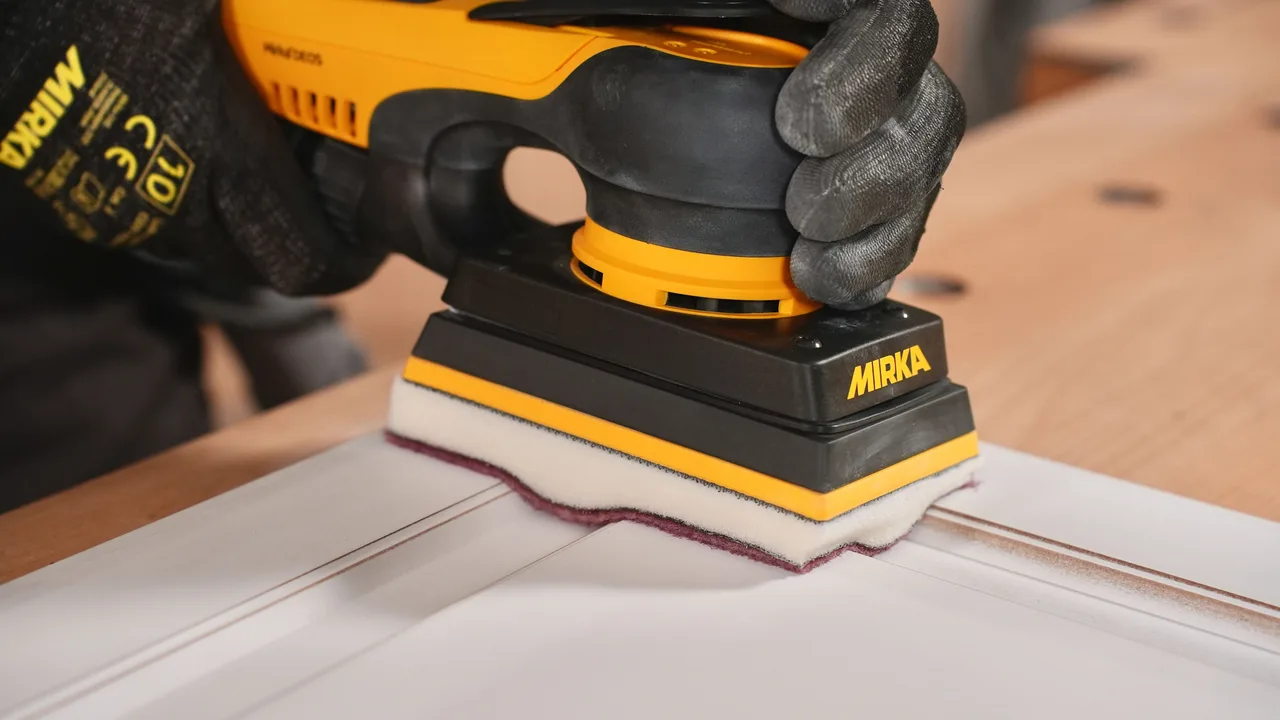
Profiled surfaces are the most laborious part of sanding. Door frames, window architraves, the edge of a piece of decorative furniture — on any grooved or curved surface a flat backing pad is useless and the work falls back on fingertips. Pressure applied by hand is never even, and the result is a wavy surface with a matt depth that varies from spot to spot.
What the interface does
The Mirka Profile Foam Interface is a foam pad designed to conform to profiles, grooves and curved surfaces. It sits between the abrasive and the workpiece and lets the abrasive take the shape of the surface. The gains:
- Even pressure. The pad spreads the load, so the bottom of a groove gets the same treatment as its edge.
- Consistent finish. No locally polished or over-sanded spots.
- Speed. Markedly faster than sanding by hand, without giving up surface quality.
What it works with
- Product code: 133-81-18-GRIP
- Machine: Mirka DEOS II 353 electric sander — or a hand sanding block
- Recommended abrasive: Mirlon Total VF 360 discs
Where it pays off
Wooden doors and windows, architraves and skirting, decorative furniture, and lacquer coats that need intermediate sanding. The same logic applies on the automotive side for body curves and interior trim parts.
The full Mirka abrasives range is in our price list, and our technical team can advise on the right grit sequence for your application.
Source: Mirka, 3 September 2025.